
Table of Contents
ToggleVirtual reality trends 2026 point toward a year of major shifts in how people experience immersive technology. Headsets are getting lighter. Social platforms are gaining traction. Businesses are investing heavily. And AI is changing what’s possible inside virtual environments.
The VR industry has moved past the “early adopter” phase. Analysts project the global VR market will exceed $50 billion by 2026, driven by consumer demand and enterprise adoption alike. This article breaks down the key virtual reality trends 2026 will bring, from hardware improvements to workplace applications, so readers can stay ahead of what’s coming.
Key Takeaways
- Virtual reality trends 2026 point to lighter, faster standalone headsets with 4+ hour battery life and sub-$300 price points driving mainstream adoption.
- Social VR platforms are evolving with realistic avatars, persistent virtual spaces, and cross-platform compatibility to rival traditional video calls.
- Enterprise VR adoption is accelerating, with training simulations improving knowledge retention by up to 75% compared to traditional methods.
- AI integration is transforming VR through procedural content generation, intelligent NPCs, and real-time language translation.
- The global VR market is projected to exceed $50 billion by 2026, signaling the technology has moved beyond the early adopter phase.
- Businesses should prepare now to integrate VR into workflows for training, collaboration, and customer experiences.
Advances in Standalone Headset Technology
Standalone VR headsets have become the standard for most consumers. In 2026, expect these devices to get faster, lighter, and more capable.
Meta’s Quest line continues to dominate the market, but competitors like Apple, Sony, and emerging Chinese manufacturers are pushing the boundaries. The next generation of standalone headsets will likely feature:
- Improved processing power: New chips purpose-built for VR will handle more detailed graphics and smoother frame rates without external hardware.
- Extended battery life: Current headsets average 2-3 hours of use. 2026 models aim for 4+ hours through better power management.
- Enhanced display resolution: Eye-tracking combined with foveated rendering will deliver sharper visuals while reducing processing demands.
- Slimmer form factors: Pancake lenses and lighter materials are shrinking headset profiles. Some 2026 models may weigh under 400 grams.
These virtual reality trends 2026 will make VR more accessible to casual users. A lighter, longer-lasting headset removes friction. People won’t need a gaming PC or dedicated space to enjoy immersive experiences.
Price points are also shifting. Entry-level standalone headsets may drop below $300, opening the door for mainstream adoption. This hardware evolution sets the foundation for everything else happening in VR.
The Rise of Social and Collaborative VR Experiences
Social VR platforms are growing fast. Apps like VRChat, Rec Room, and Horizon Worlds have built active communities, but 2026 will push social interaction further into the mainstream.
What’s changing? The experiences themselves are getting better. Early social VR felt clunky, avatar movements were stiff, audio quality was poor, and environments looked basic. That’s shifting.
Virtual reality trends 2026 show a focus on:
- Realistic avatars: Body and face tracking technology allows avatars to mirror real expressions and gestures. This makes conversations feel more natural.
- Persistent virtual spaces: Users can create and customize spaces that exist even when they log off. Think digital apartments, studios, or hangout spots.
- Cross-platform compatibility: People on different headsets can meet in the same virtual rooms. This breaks down hardware barriers.
- Live events and concerts: Musicians and creators are hosting virtual events that attract thousands of simultaneous attendees.
For many users, social VR is becoming a genuine alternative to video calls. Remote friends can “hang out” in a virtual living room. Families separated by distance can share experiences together.
The implications extend beyond entertainment. Virtual reality trends 2026 suggest social VR will influence how people build and maintain relationships. It’s not replacing physical presence, but it offers something video calls can’t, a sense of shared space.
Enterprise and Workplace Applications Expanding
Businesses are betting big on VR. Training, collaboration, and design applications are moving from pilot programs to standard practice.
Enterprise adoption represents one of the strongest virtual reality trends 2026 will see. Here’s where companies are investing:
Training and simulation: Industries like healthcare, manufacturing, and aviation use VR to train employees in safe, repeatable environments. A surgeon can practice a procedure dozens of times before touching a patient. A factory worker can learn machine operations without safety risks.
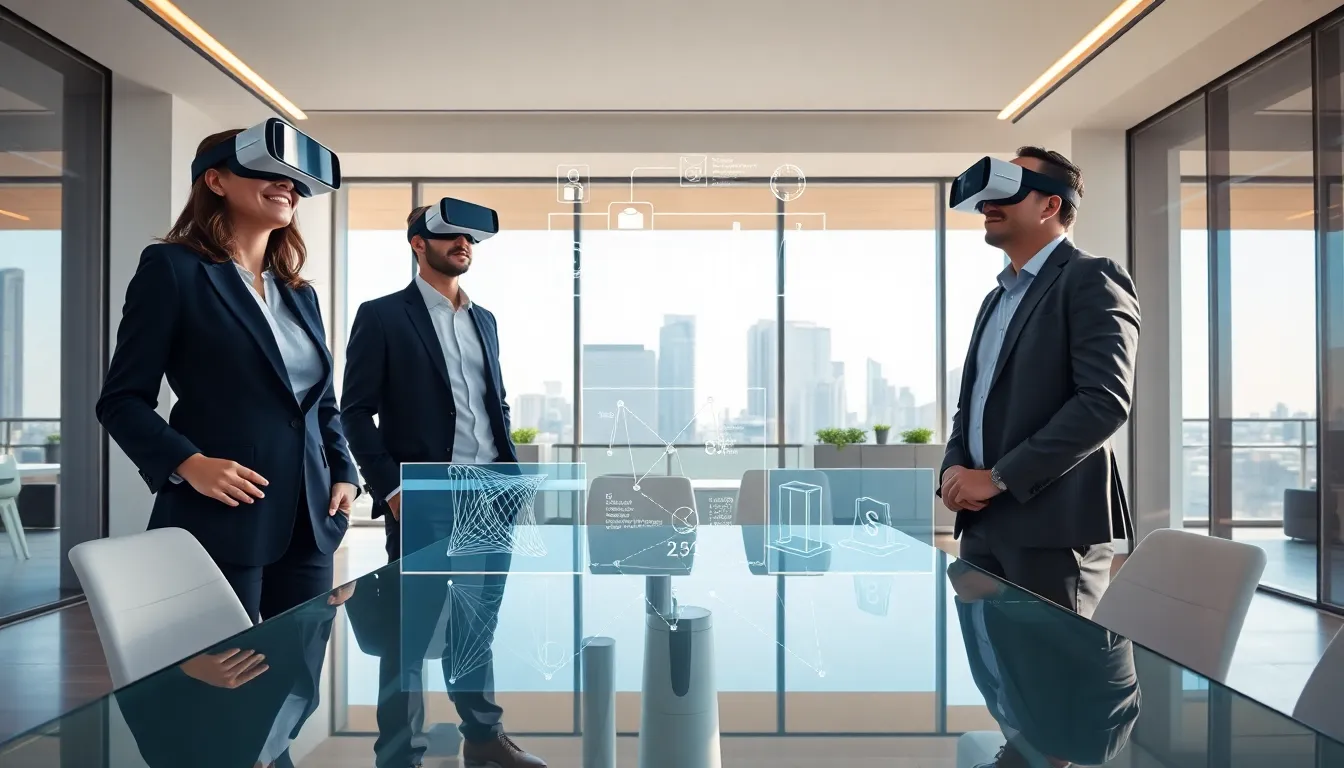
Remote collaboration: Virtual meeting rooms allow distributed teams to work together in 3D space. Engineers can review product designs. Architects can walk clients through buildings before construction begins.
Retail and sales: Some companies use VR to showcase products. Customers can explore cars, furniture, or real estate without visiting a physical location.
Therapy and wellness: Mental health providers are adopting VR for exposure therapy, stress reduction, and pain management programs.
The ROI is becoming clearer. Studies show VR training can improve retention rates by up to 75% compared to traditional methods. Companies also save money on travel, physical training materials, and facility costs.
Virtual reality trends 2026 indicate enterprise VR will move beyond early experiments. More organizations will integrate VR into daily workflows rather than treating it as a novelty.
AI Integration Enhancing Immersive Environments
Artificial intelligence is reshaping what’s possible inside virtual reality. This combination represents one of the most exciting virtual reality trends 2026 will bring.
AI enhances VR in several ways:
Procedural content generation: AI can create environments, characters, and scenarios on the fly. Instead of developers building every detail by hand, algorithms generate dynamic worlds that respond to user actions.
Intelligent NPCs: Non-player characters powered by large language models can hold actual conversations. They respond to context, remember previous interactions, and behave unpredictably. This changes storytelling possibilities.
Real-time translation: AI-powered translation allows users speaking different languages to communicate seamlessly in shared virtual spaces.
Personalized experiences: Machine learning analyzes user behavior to customize VR content. The environment adapts to preferences, skill levels, and interests.
Accessibility features: AI helps make VR usable for people with disabilities. Voice commands, gesture recognition, and adaptive interfaces lower barriers to entry.
The convergence of AI and VR creates experiences that feel responsive and alive. Virtual reality trends 2026 will showcase AI not as a background feature but as a core part of how immersive content works.
This integration also raises questions about data privacy and content moderation. As AI-generated environments become more common, platforms will need clear policies on what’s allowed and how user data gets used.


